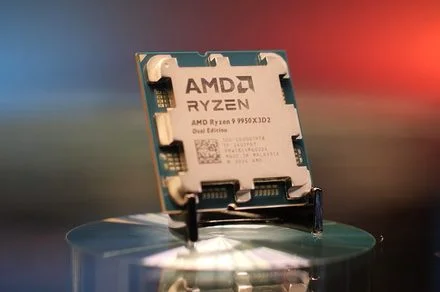
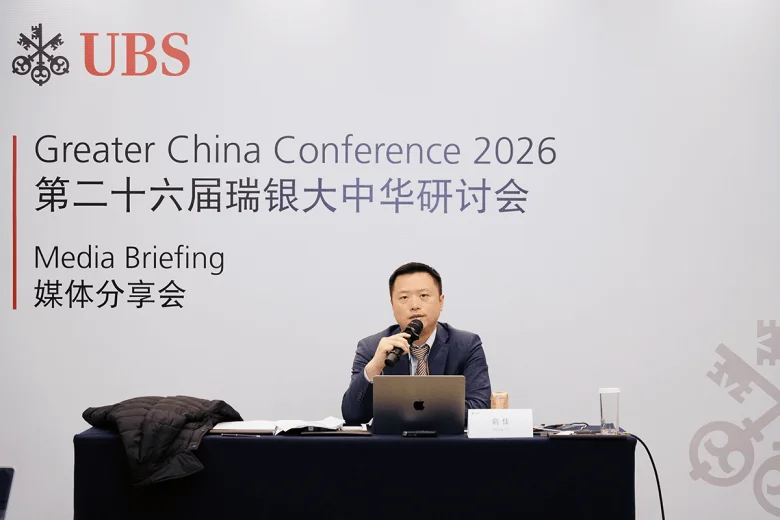
Speaking at the UBS Greater China Conference 2026 in Shanghai this Wednesday, Jimmy Yu, UBS Securities' China Technology Semiconductor Analyst, presented an optimistic outlook for the global semiconductor sector. Yu emphasized that artificial intelligence is catalyzing an industry upcycle characterized by exceptional momentum and longevity compared to historical patterns.
Yu's projections indicate the global semiconductor market will reach approximately $700 billion in 2025 before crossing the $1 trillion threshold in 2026—a year-over-year expansion exceeding 40%. The trajectory continues upward to roughly $1.18 trillion by 2027, maintaining double-digit percentage gains. While such expansion rates have precedent, Yu distinguished this cycle through its foundation in AI-driven structural demand transformation rather than cyclical inventory dynamics.
Memory semiconductors emerge as a pivotal growth engine in this expansion phase. Yu anticipates the memory segment could achieve nearly 50% growth through approximately 2027, with pricing appreciation serving as the primary revenue catalyst. Notably, even when memory is excluded from calculations, the logic chip, foundry, and adjacent segments demonstrate robust fundamentals capable of sustaining double-digit growth trajectories through the 2025-2027 period.
The demand landscape is evolving beyond traditional data center and cloud infrastructure deployments. Yu highlighted AI adoption accelerating across financial services institutions, enterprise environments, and security applications. Though certain use cases remain nascent, their addressable market opportunity is crystallizing with increasing clarity. This diversification positions AI infrastructure investment as among the most dependable semiconductor growth vectors for the foreseeable horizon.
Addressing cyclical dynamics, Yu acknowledged semiconductors retain their inherently cyclical characteristics. Revenue growth patterns suggest a potential near-term inflection point around Q3 this year.
Yet operational metrics—including foundry utilization rates, capital expenditure commitments, and margin profiles—point toward cycle peak timing potentially extending to Q3 next year. Yu noted that equity markets characteristically discount cyclical transitions one to two quarters ahead of fundamental data, creating strategic positioning windows for investors.
Examining China's semiconductor ecosystem, Yu observed that AI infrastructure buildout is generating substantial domestic demand for compute processors, leading-edge process technologies, advanced packaging solutions, and fabrication equipment. Despite China's current gap relative to international leaders in cutting-edge manufacturing capabilities, significant headroom exists for localization progress and supply chain autonomy.
Chinese semiconductor equipment manufacturers have demonstrated revenue growth rates surpassing industry benchmarks in recent years, with multiple subsectors exhibiting sustained technological advancement.
Artificial intelligence is fundamentally reconfiguring semiconductor demand architecture. Spanning cloud infrastructure to edge computing deployments, and encompassing autonomous vehicle systems to robotics and intelligent endpoint devices, requirements for high-performance, power-efficient silicon continue intensifying. Underpinned by both global trends and China-specific catalysts, the present semiconductor expansion cycle appears positioned to persist through 2026 with potential extension beyond that timeframe.