AMD has introduced what could be its most ambitious desktop processor to date: the Ryzen 9 9950X3D2. This latest silicon represents an aggressive bet on a single architectural element—cache memory.
The processor builds upon the foundation established by the AMD Ryzen 9 9950X3D, but takes a fundamentally different architectural approach. Rather than limiting stacked cache to a single core complex die, AMD has implemented dual 3D V-Cache across both CCDs. This configuration delivers an unprecedented 208MB of aggregate cache—positioning it among the most cache-rich consumer processors ever manufactured.
What makes the 9950X3D2 different?
The underlying architecture remains familiar: a 16-core, 32-thread Zen 5 design that mirrors the standard 9950X3D's core topology. The departure lies in AMD's cache implementation strategy. Previous X3D processors employed an asymmetric approach, stacking additional 3D V-Cache exclusively on one CCD to maintain thermal headroom and clock speed optimization.
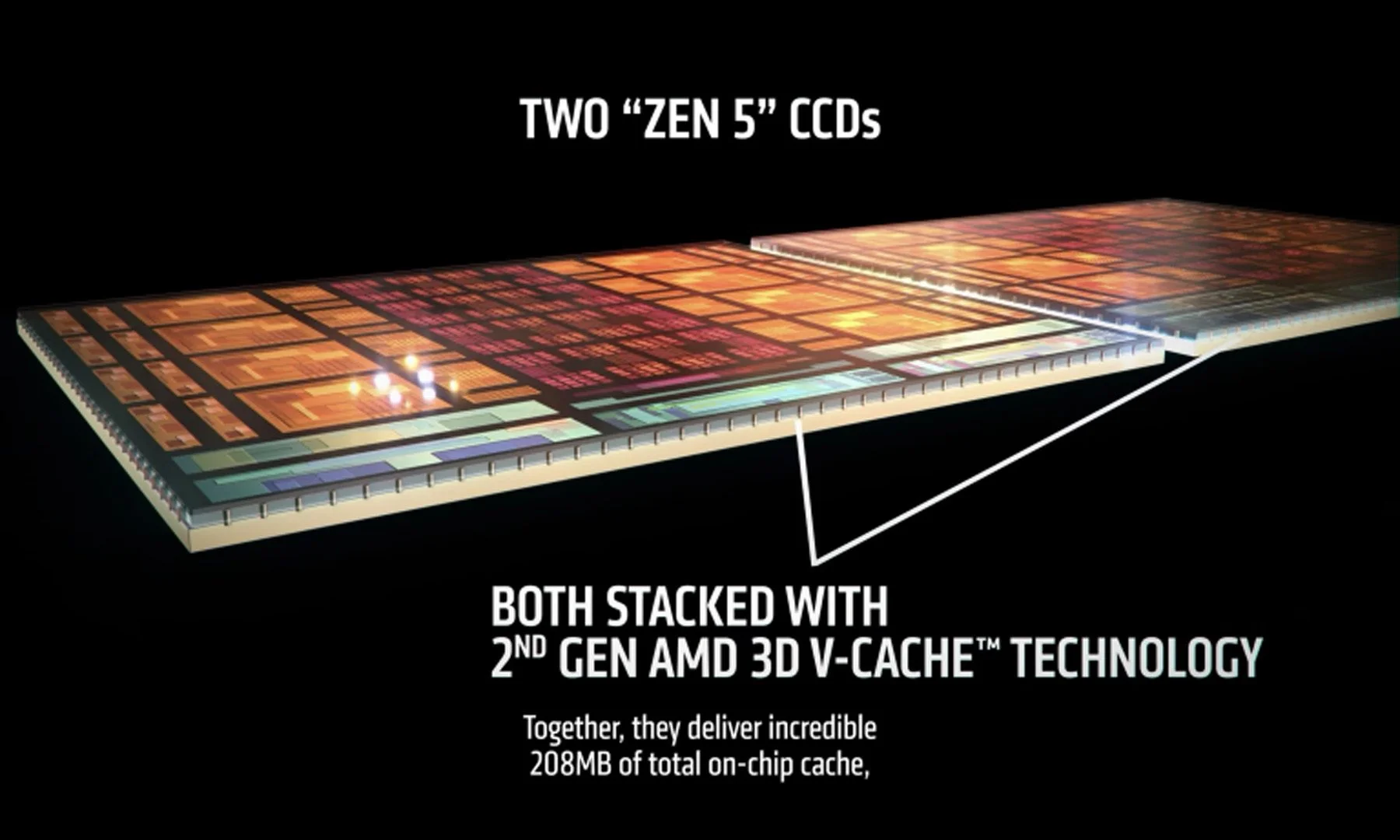
The 9950X3D2 abandons that conservative methodology entirely. By deploying stacked cache across both chiplets, AMD effectively doubles the available L3 cache pool to approximately 192MB, pushing total cache capacity to 208MB. This architectural decision carries consequences—the chip operates at a 200W thermal design power, marking it as one of AMD's most thermally demanding desktop offerings.
Why does all this cache matter?
Cache functions as a performance accelerator by minimizing data retrieval latency. In gaming workloads particularly, expanded L3 cache allows the processor to maintain frequently accessed instructions and data in close proximity to execution units. This reduces dependency on slower system memory and can dramatically improve frame pacing in competitive titles and expansive open-world environments. By implementing symmetrical cache distribution across both CCDs, AMD is pursuing maximum performance extraction, though the relationship between cache size and real-world gains becomes increasingly nonlinear beyond certain thresholds.
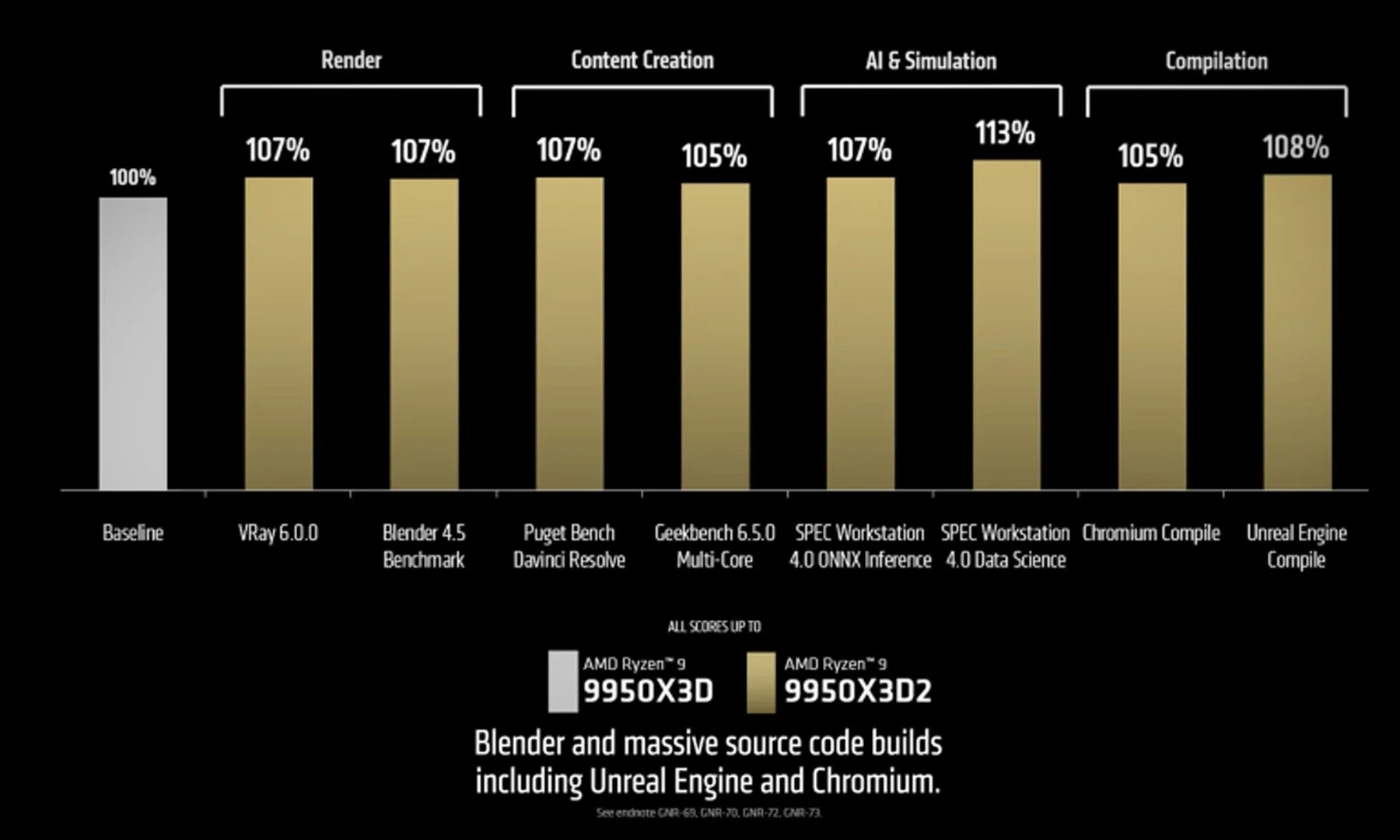
This processor clearly targets a specific segment. Enthusiast builders, performance-focused gamers, and workstation users willing to accommodate elevated power consumption and premium pricing will find the most value here. The elevated TDP and specialized positioning suggest this is fundamentally a halo product—a technological showcase demonstrating capability rather than addressing mainstream requirements.
Strategically, this processor represents AMD exploring the outer boundaries of X3D technology within the Zen 5 architecture. Rather than serving as a direct replacement for existing SKUs, it functions as an experimental platform testing how far cache-centric optimization can extend before the Zen 6 transition. While pricing remains undisclosed, AMD has confirmed an April 22nd launch date. The 9950X3D2 ultimately reinforces AMD's continued commitment to cache as its primary differentiation strategy in gaming-focused processor design.