China's 2026 CCTV Spring Festival Gala transformed into an unexpected showcase for cutting-edge robotics, with humanoid machines taking center stage across multiple segments. The integration of advanced robotic systems into one of the world's most-watched television events signals a notable milestone in the commercialization and public acceptance of humanoid technology.
MagicLab opened the robotics showcase with a dual-platform demonstration. The MagicBot Gen1 executed fundamental interaction protocols including greeting gestures, while its more advanced sibling, the MagicBot Z1, attempted what the company claims is an industry first: a full 360-degree Thomas rotation performed by a humanoid robot in this form factor. According to MagicLab, no comparable platform has successfully executed this continuous rotational maneuver at scale.
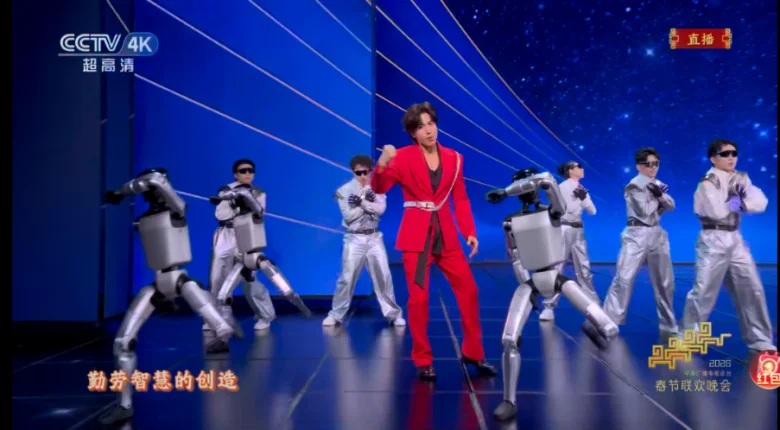
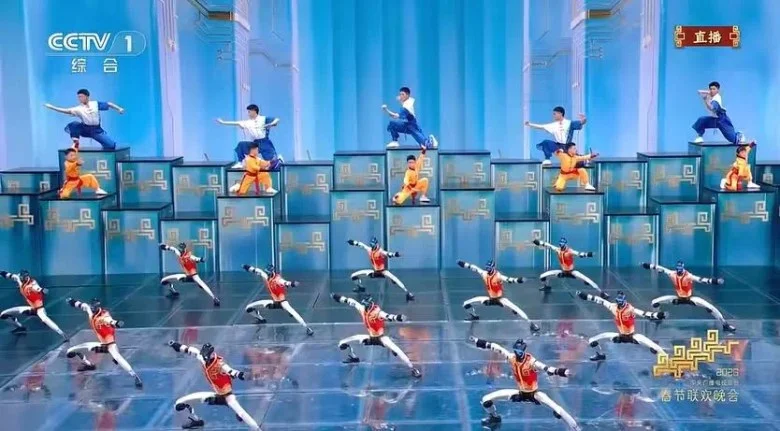
Unitree Robotics returned for its third consecutive Gala appearance with an ambitious martial arts demonstration titled WuBOT. The company deployed its G1 and H2 humanoid platforms in synchronized choreography alongside human performers, executing traditional kung fu stances, aerial rotations, weapon handling with nunchaku, and stylized Drunken Fist sequences that demand exceptional balance control.
Unitree founder Wang Xingxing emphasized that this year's technical challenge centered on dynamic formation reconfiguration during high-velocity locomotion. The underlying systems leverage sophisticated motion control architectures and distributed coordination algorithms designed for multi-agent synchronization. These capabilities have direct implications for industrial applications requiring collaborative robotic operations in unstructured environments.
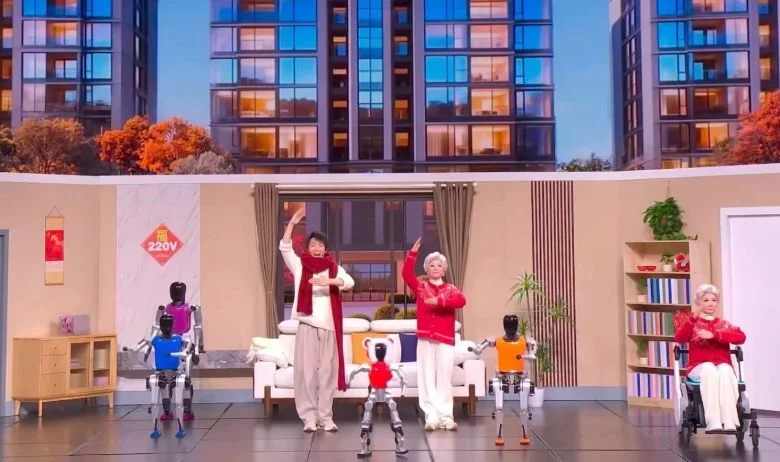
Noetix Robotics integrated multiple humanoid variants into the comedy sketch Grandma's Favorite, deploying the Bumi, N2, and E1 models alongside a custom bionic platform developed specifically for the production. Operating within a constrained 12-square-meter performance area, the robots demonstrated lateral flips, backward rotations, and other acrobatic maneuvers that underscore advances in spatial path planning and precision touchdown algorithms for confined operational zones.
Beijing Galbot contributed to the holiday vignette The Night I Remember Most with a demonstration focused on practical service capabilities. The platform exhibited natural language processing through conversational exchanges, performed textile manipulation tasks including garment folding, and executed object retrieval operations in coordination with human actors. The sequence showcased integrated perception systems, real-time decision-making frameworks, and fine motor control necessary for household assistance applications.
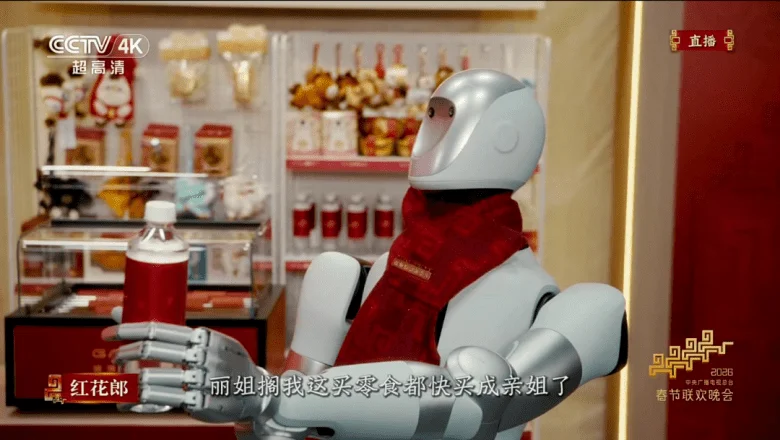
The prominent placement of humanoid robotics on this high-visibility platform reflects measurable progress in core technical domains including locomotion control, dynamic stabilization, and natural human-robot interaction paradigms. Live demonstrations in broadcast conditions offer valuable benchmarking data on system maturity and operational readiness beyond controlled laboratory settings.
While humanoid platforms continue advancing their capabilities in dynamic environments and multi-agent coordination, the technology is transitioning from research validation toward commercial demonstration and limited service deployment. Widespread adoption remains contingent on resolving fundamental challenges in unit economics, system reliability under extended operation, and maintenance scalability across diverse use cases.